How to Plan a Land-Based Surf Trip in the Maldives: Himmafushi, Jailbreaks, No Charter Required
Ask anyone how to surf the Maldives and you'll get the same answer: charter a boat. Vienna-based architect and photographer Eric Sviratchev has never needed one.
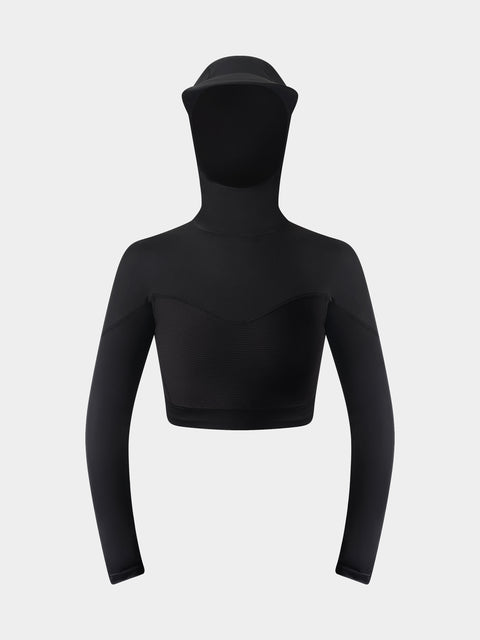
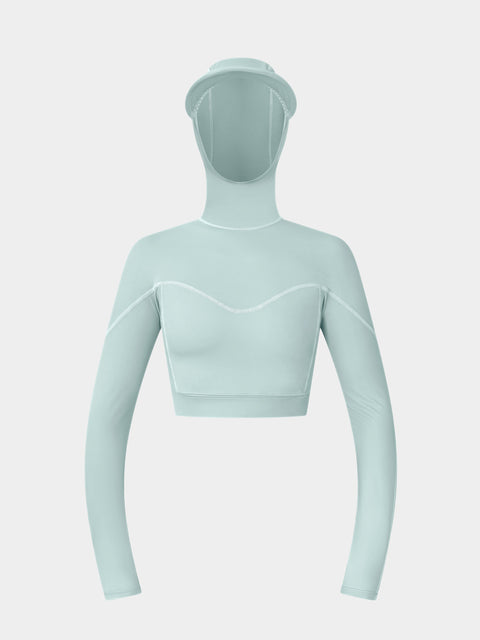
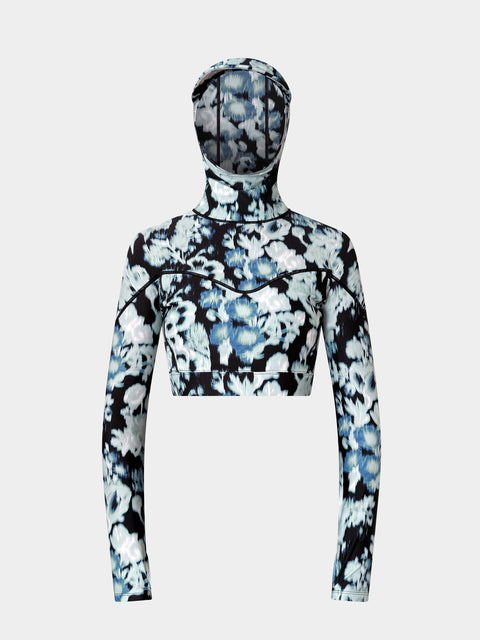
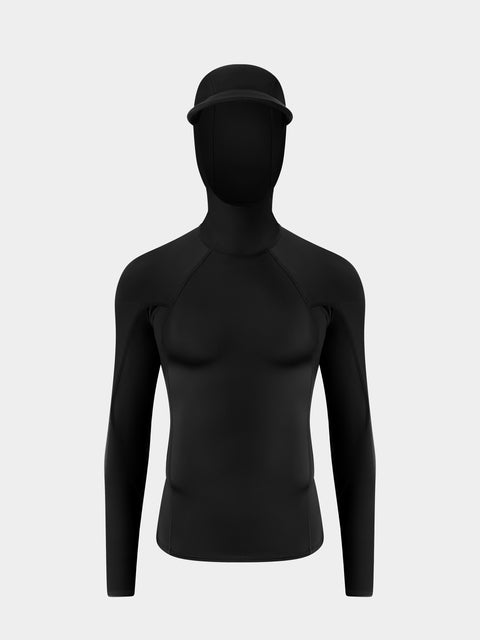
Three trips in, his routine is set: fly into Malé, skip the seaplane transfer, and take the short speedboat ride to Himmafushi, a small local island where Jailbreaks — one of the best right-handers in the country — peels off the northeastern tip. He documented his recent trip, where he and a few friends surfed in our Pipeline Hooded Rashguard, because equatorial sun is not something you negotiate with.
We asked Eric about the trip, his eye, and how to plan a Maldives surf trip that starts on land.

VSC: Before we get to the Maldives — you're an architect and a photographer. How do those two practices feed each other, and how would you describe your eye?
ES: I studied architecture in Vienna and have been working in this field for over a decade. Design and arts have always been part of my life. I’ve been feeding off the creativity my parents showed me growing up. Picking up my dad’s analog cameras introduced me to photography. I think while architecture focuses on creating, photography leaves space for documenting my surroundings. I focus on the often unseen, the details that emerge in certain light.
VSC: Everyone assumes a Maldives surf trip means a boat charter. What made you choose to base yourselves on Himmafushi instead, and would you make the same call again?
ES: As you mentioned, the first time I heard of surfing on the Maldives was when some friends from home traveled to the southern atolls on a charter, but a couple of years back my good friend Patrick returned from a South East Asia surf trip in summer and introduced me to the small local island of Himmafushi. Jails seemed to be the perfect warm water wave even for a shorter trip surfing in the Indian Ocean. He promised long reef breaks and daily waves. No further introduction was needed.


VSC: Walk us through the logistics for anyone planning this: getting from the airport to the island, and where you stayed.
ES: While most people traveling to the Maldives quickly get transfers to some honeymoon resort, surfers can choose the nearest archipelagos close to the dense capital of Malé. Himmafushi and Thulusdhoo are just about an hour north of the airport and offer world class waves and local stays. We chose to stay at Jailbreak Inn with Amin, who was our previous host and is a great human. One of the first locals opening a spot for surfers to stay on that island. Many followed, but his place still welcomes travelers coming back every year. I met some great people from home and even the Canary Islands. Check in with your local host and hop on the ferry to your chosen destination. Local people hang out and help out at the terminal, which is right next to the port.

VSC: Jailbreaks is right off the island, with Sultans, Honky's, and Cokes a short boat ride away. Which breaks did you surf? How did you get to each one? And which ended up being your favorite and why?
ES: While Jails is located on the northeastern tip of the island, the other spots are only reachable by boat. Accommodations and locals offer trips once or twice a day. So you can easily access the other waves that are located close by. Jails is a righthander with two prominent sections. A fast but user friendly wave. On bigger days both sections connect and might even provide some barrels. Sultans usually gets more attention since it's right in between all the spots close by and has a softer but usually bigger wave. Waves like Cokes and Chickens attract the more experienced surfers; those are faster waves with more critical take offs. Local people are friendly and most tourists can agree upon the usual surf etiquette. Our favorite wave is Jails. Once you understand how it works, any section will provide an amazing ride. Either racing down the line or carving a big cutback while the pod of dolphins passes by on their sunrise commute.


VSC: Is there a time of year you'd tell someone to go if they want what you got — and what were conditions actually like while you were there? Who is this type of trip right for, ability-wise?
ES: So there is surf almost year round but as usual close to the equator surf is best around northern summer months. I have been there three times now and it was always around July. I believe the best season runs from May till September. Even if it's raining it usually just pours down for an hour and then it's back to tropical heat. Surf conditions are usually consistent and only vary in size around that time. I'd recommend surfing there to everyone experienced enough to be comfortable surfing over reef and who enjoys point breaks as much as I do. It’s like the natural wave pool you’ve dreamed of. When out of the water you should stay in the shade, meet at the local coffee shop for a cold drink and regain energy for the next session.


VSC: You're in the water at the equator for hours a day. What did you pack, and how did the Pipeline Hooded Rashguard hold up?
ES: In these bright and sunny conditions it's essential to protect your skin and your eyes. Even if you are used to being exposed to sunlight throughout the summer season, your skin needs to be taken care of. I used the rashguard on every surf session except my last one. It kept me from any kind of sunburn and I very much enjoyed the hood when the bright sunlight reflected off the water. My final surf session was a boardshorts only experience just for the heck of it. I actually prefer the neo tops and rashguard, saving my landlocked skin texture. Other than that there's just some simple things to pack: shirts, boardshorts and some kind of sandals, but most importantly sunscreen and mosquito repellent. I like a natural one my friends in Austria produce.

VSC: As a photographer, what did the Maldives give you that other surf trips haven't? How did you approach shooting this one?
ES: As a photographer it's always a valuable creative challenge to limit yourself so you can create possibilities. In Himmafushi the space and surroundings are pretty limited. The island has a certain vibe and I enjoyed focusing on some views I remembered from my previous stays, while leaving space to explore the colorful details and strong sunlight patterns that usually draw a bright environment. I grabbed a waterproof digicam for almost every session in the back of my rashguard, which created some of the snapshots from inside the water. Surf photography is in a league of its own. The photographer, the equipment, the timing, the conditions, and the surfer — all these uncertainties have to align so a great shot can be created. Whenever it happens you know straight away that the shot was worth it.


VSC: What's one thing you wish you'd known before going — and what are you working on next?
ES: Honestly the best thing about it is not knowing what to expect. What follows is usually the best experience, either in terms of surfing or when running around with your camera switched on. Leaving room for the unexpected creates space for creativity that broadens your view. I guess that leads to my next journey, which is becoming a father for the second time. Let's see where this leads us. For sure I'm welcoming more love into our family, so I believe my journeys and plans will evolve around them.


There's the Maldives of the honeymoon brochures, and there's the one Eric keeps going back to: a village island with a ferry terminal, a guesthouse that remembers him, and a world-class right-hander at the end of the street — about as close as surf travel gets to our definition of luxury. His one piece of advice is to leave room for the unexpected. Ours is to dress for however long it takes to show up.
All images by Eric Sviratchev. Eric's photography lives at Concept.vira. Congratulations on the growing family, Eric — we suspect the next trip involves more luggage.
If Himmafushi just moved up your list, here's how to plan it.
Plan it: Himmafushi in brief
Getting there. This is the whole point — there's barely any getting there. Himmafushi sits about 15 km from Velana International Airport in North Malé Atoll. Options run from the local ferry from Malé (around US$2, no Friday service) to a public speedboat (around US$10) to a private charter (around US$100), with the speedboat taking twenty to thirty-five minutes. You can be off a long-haul flight and watching the lineup at Jailbreaks before you've fully registered the humidity.
The waves. Jailbreaks breaks right off the island — a reeling right-hander over reef, its clearly defined peaks linking into one long wave when conditions line up, and it's walking distance from the guesthouses, so you can paddle out whenever it's on. Jailbreaks sits in front of the island's jail, and until recently it was technically illegal to surf there. From the island, Sultans, Honky's, Cokes, and Chickens are all a short boat ride away, which most guesthouses run daily. Most of these are shallow reef breaks best suited to intermediate and advanced surfers.
When to go. The season runs April to October on consistent southwest swells, peaking May through August with waves from waist-high to overhead. April, September, and October bring similar quality with fewer people in the water.
Where to stay. Himmafushi is a local island, not a resort island — accommodation means small, locally run surf guesthouses, most within a few minutes' walk of the beach, typically offering packages with meals and daily surf transfers included. Simple, close to the water, and run by people who read the forecast as obsessively as you do.
Good to know. This is an inhabited village island with a harbor, a mosque, and a designated bikini beach — dress modestly away from it, and note that local islands are dry; in the Maldives alcohol is only served on boats and resort islands. And the sun: you're on the equator, in the water for hours, with UV bouncing off everything. Sunscreen alone won't get you through a three-session day. This is exactly what our UPF50+ surfwear was built for.