Argenis Gálvez: Sunset Cliffs
An editorial and conversation about the ocean, craft, and creating on your own terms, featuring surfer Christian Murillo and free-diver Claridy Grace.
Argenis Gálvez is a San Diego-based photographer whose work moves between surf, landscape, and portrait — taking him to Big Sur, the Mojave, the Oregon coast, and always back to Sunset Cliffs.
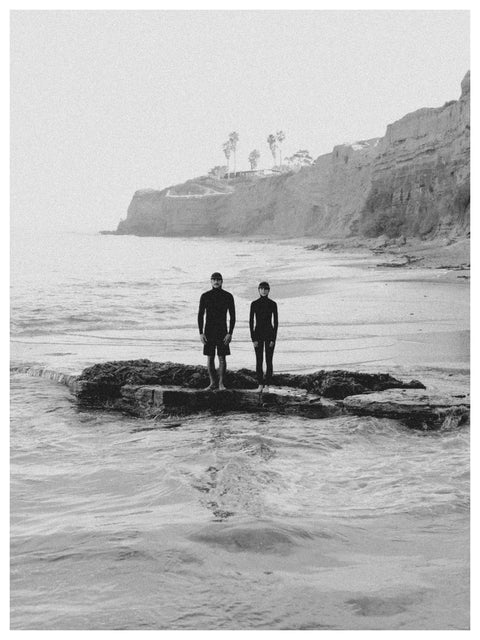
The first photograph he ever took in San Diego was at Sunset Cliffs. That was years ago. He's been returning ever since, watching them erode, watching his own work change alongside them.
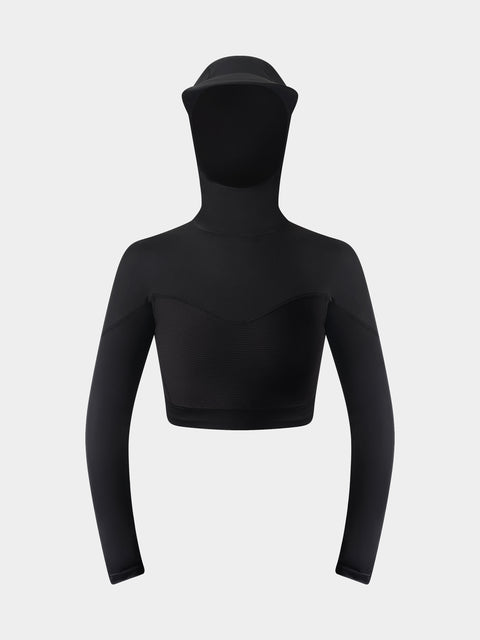
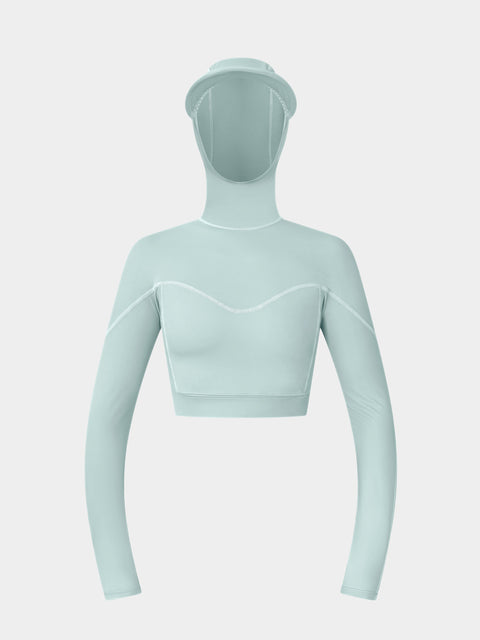
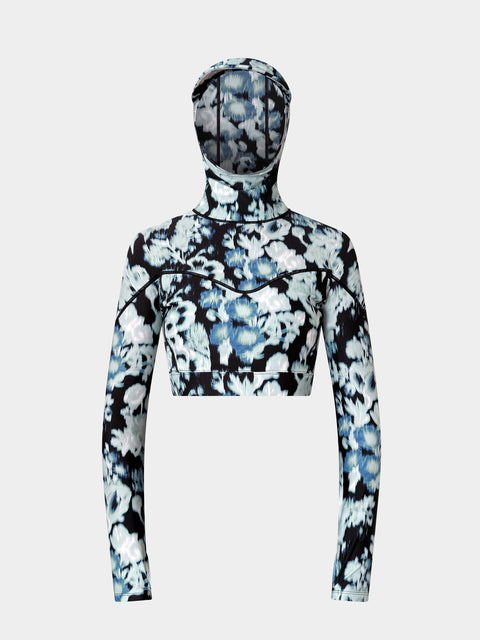
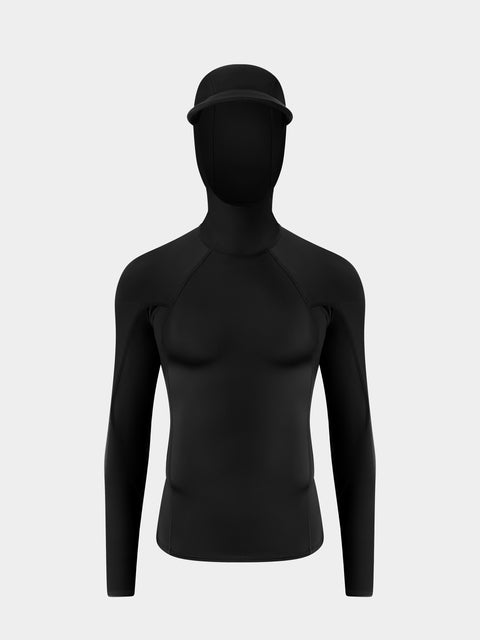
It was there that Argenis chose to shoot our latest editorial, with San Diego surfer Christian Murillo and freediver Claridy Grace wearing our signature UPF50+ hooded styles. We asked him a few questions about craft, the ocean, and what happens when you stop making work for an algorithm and start making it for yourself.

 VSC: Your motto is "Live to Explore | Explore to Live." What does that actually look like in practice? Are you the person who wakes up at 4am to chase the light, or does it find you?
AG: What a question. For a long time, I believed that Live to Explore, Explore to Live revolved around pursuing endless adventures through travel — living an “epic” lifestyle, if you will.
Now that motto feels more grounded. To me, it’s about exploring your fears and understanding that true life is often found when you look within yourself, especially when that introspection is paired with your passions. Living by that motto required me to explore different types of light and refine my craft so I could create images in any condition.
I used to wake up early to capture what I believed was the “ideal” light. It took a lot of trial and error to realize that photography is more than shooting in perfect conditions.
VSC: Your work moves across surf, portrait, and landscape — Big Sur, the Mojave, Sunset Cliffs. What draws you to the ocean specifically, and how does shooting water feel different from everything else?
AG: The ocean demands your full attention. If you’re present, the moments it offers disappear just as quickly as they arrive.
To photograph the ocean well, you have to truly connect yourself to it. And once you find that synchronicity, it’s a feeling that keeps pulling you back. There’s really nothing else like it.


 VSC: Your portfolio spans wide landscapes and tight portraits — two very different ways of seeing. When you're shooting someone in the water or on the cliffs, how do you decide whether the person is the story or the place is?
AG: A lot of times, that decision happens in the moment. When I arrive on location, I take time to look around and pay attention to how the environment interacts with the person I’m photographing. In many ways, both become my subjects and require equal attention.
The story is really the relationship between the two, and that relationship reveals itself as we explore the space together.

 VSC: How do you navigate the tension between being present in a moment and lifting the camera? Do you think photography ultimately brings you closer to a place or keeps you at arm's length from it?
AG: Photography has definitely brought me closer to the places I shoot, and it’s also taught me to be more present through observation.
When I first started photography, I would immediately raise my camera and shoot everything I saw. Over time, that changed. Now I prefer to arrive at a location, walk around, and take everything in before lifting the camera.
Once my mind feels settled and in tune with the environment, that’s when I begin shooting.
VSC: Sunset Cliffs is already part of your portfolio. What is it about that spot that keeps pulling you back?
AG: For one, it’s iconic. The first photograph I ever took in San Diego was at Sunset Cliffs. From the moment I was introduced to that location, I knew it would be a place I’d return to again and again.
As the cliffs slowly erode over time and I continue growing as a photographer, it feels important to keep returning there and incorporating it into my work for as long as I can.

 VSC: Your work has a strong personal point of view — it doesn't feel like it's chasing trends or optimising for an algorithm. Has that been a conscious choice, and do you think it's changed the work?
AG: The direction of my work is definitely a conscious choice, though it came after repeated failures creating work that didn’t feel like me.
For a long time, I chased what I thought would bring the most engagement. I believed following the algorithm would validate my work, but instead it only created stress and pulled me away from creativity.
Once I faced the fear of creating work for myself rather than for an audience, everything changed. The work started to feel like a reflection of who I am, instead of a reflection of what an algorithm defines as successful. And ironically, that’s when the work started connecting with people the most.
 VSC: What's a project or place you haven't shot yet that you can't stop thinking about?
AG: Fiji is a place I can’t stop thinking about. The clarity of the water and the surrounding landscapes feel almost unreal, and it seems like the kind of place where nature feels untouched. One of my biggest dreams is to swim with whales, and Fiji offers that possibility. I imagine that moment being both humbling and surreal—an experience I’d love to translate into photographs.
 Argenis keeps coming back to where he started — back at the cliffs, making work that's his. In a world optimized for engagement, choosing your own point of view is rebellion.
Welcome to the club.
See more of Argenis's work at argenisgalvez.com and on Instagram @argenisgalvez.