Spot the Dot: A Surfer’s Guide to Skin Cancer Checks
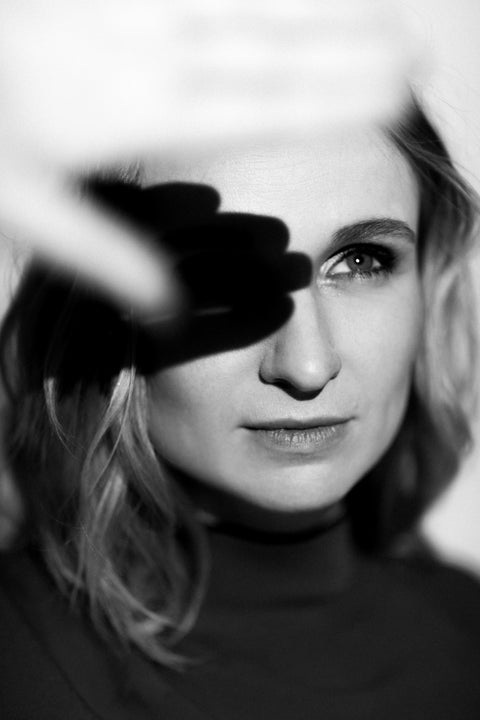
Written by Marije Kruis, Founder of Spot the Dot
Spot the Dot is a global non-profit founded in 2015 by Dutch melanoma patient Marije Kruis. Working in 9+ languages, it partners with artists, athletes, patients, and dermatologists worldwide to raise awareness about melanoma and skin cancer. The organization inspires early detection through open dialogue and proactive prevention. www.spotthedot.org Instagram @spot.the.dot
My Surf Summer That Never Happened
I had just turned 30 and was planning a summer break at a friend’s surf school in Portugal. I decided it was time to properly learn how to surf. Little did I know I would never make it there. A couple of weeks before the trip, I was having coffee with a friend outside. We sat close together when he noticed a tiny spot on my lower leg that looked suspicious. He urged me to get it checked. I had never really thought about skin checks before and hadn’t even noticed that mole, but I took his advice. That small, dark dot turned out to be an advanced melanoma.
Instead of a summer filled with surfing, I had multiple surgeries and began a year of treatment. At one point, the outlook wasn’t great, my life expectancy had suddenly become uncertain. Fortunately, I’m still here to tell the story. During that time, I kept hearing the same false assumptions about skin cancer over and over again: “You can’t die from skin cancer.” “Only pale people like you get skin cancer.” “You’re too young to have melanoma.” It really hit me how little people know about what skin cancer looks like, who it affects, and how serious it can be.
Skin cancer doesn’t discriminate. It can affect anyone, regardless of age, gender, or skin tone. It’s not just something that happens to people with fair skin, like me. Bob Marley, for example, died from a type of skin cancer. While fair-skinned individuals are at higher risk, people of color are often diagnosed at a later stage, which makes skin cancer more dangerous for them. That gap in awareness is what inspired me to start Spot the Dot, a nonprofit dedicated to raising awareness about melanoma and the importance of early detection.
Have Your Buddy’s Back
Unfortunately, I’m not the only one who developed skin cancer at a young age. Globally, skin cancer rates are rising, and it’s the third most common type of cancer among young people. Prevention matters, and it starts with being smart about sun exposure. Doctors believe my melanoma likely developed from a few bad sunburns I had as a kid. I’m not here to kill your beach day, just to remind you how crucial it is to protect your skin from UV damage. I actually squeaked with happiness when I discovered Vampire Surf Club. I’d long wished for a hooded rash guard that looked cool and made me feel empowered in the water. I often tell people: find sun protection that works for you and fits your lifestyle.
Prevention isn’t the only message I focus on. I started Spot the Dot because knowing what to look for can save lives.. If my friend hadn’t known how to spot a suspicious dot, I probably wouldn’t have gone to the doctor and I might not be here to tell this story. We need to have each other’s backs, literally.
The Best Way to Catch Skin Cancer Early
 The good news? Skin checks are painless, pretty easy, and trust me… they can even be kind of fun to do with a lover 😉. When you catch and treat skin cancer early, the survival rate is really high. However, as it progresses, melanoma becomes increasingly harder to treat, and the treatment options become more limited. So what’s stopping you?
Doing a skin check means paying attention to all the spots on your body: moles, freckles, sunspots. Skin cancer can show up anywhere (even where the sun does not shine) and is one of the few cancers you can usually see on the surface. I always ask someone to help check those hard-to-see spots, like my back or scalp. Do not forget to remove your nail polish, as skin cancer can appear underneath the nails.
The ABCDE's of Spotting Skin Cancer

This is the ABCDE method dermatologists use to recognize melanoma, the most dangerous form of skin cancer. If you notice one or more of the following signs, book in with a professional. ASAP.
A = Asymmetry: The two halves of the mole have different shapes.
B = Border: The edge of the mole is irregular. It may look blurred, ragged, or notched. Pigment may spread into the skin around the mole.
C = Colour: The colour of the mole is uneven. The mole may have different shades of tan, brown, and black, sometimes with blue, gray, red, pink, or white.
D = Diameter: While melanomas are usually greater than roughly 1/4 inch (6 mm) wide, about the size of a pencil eraser. When diagnosed, they can be smaller.
E = Evolving: The mole has changed in the past few weeks or months. It may be itchy, scaling or bleeding.
Play the Check a Mole Game
To help people remember the ABCDEs, I created a fun and free browser game called Check a Mole. It is available in 8 languages, and it makes learning this lifesaving skill easy. www.spotthedot.org/game
Riding the Wave of Awareness Together
I hope my story inspires you to take a few minutes each month to check your skin, and to encourage your friends and family to do the same. Raising awareness can be simple: educate yourself on how to protect your skin when you're surfing and share tips with your friends, check out Beyond Sunscreen: A Dermatologist's Guide to Sun Protection for Surfers (link), and ask your surf buddies when was the last time they checked their skin. Together, we can catch skin cancer early and ride the wave toward healthier, safer days.
This article was medically reviewed for accuracy by MD Amanda Zbyszewski, board certified dermatologist in Vienna, Austria. For more information, visit www.dermaz.com
References: Roberts, H., Bleyer, A., Tai, E., Jemal, A., & Siegel, R. (2011). Melanoma incidence among adolescents and young adults in the United States. Journal of the American Academy of Dermatology, 64(6), 1026–1034. https://pubmed.ncbi.nlm.nih.gov/22018066/